Tuscarora Traverse
March 23rd, 2026
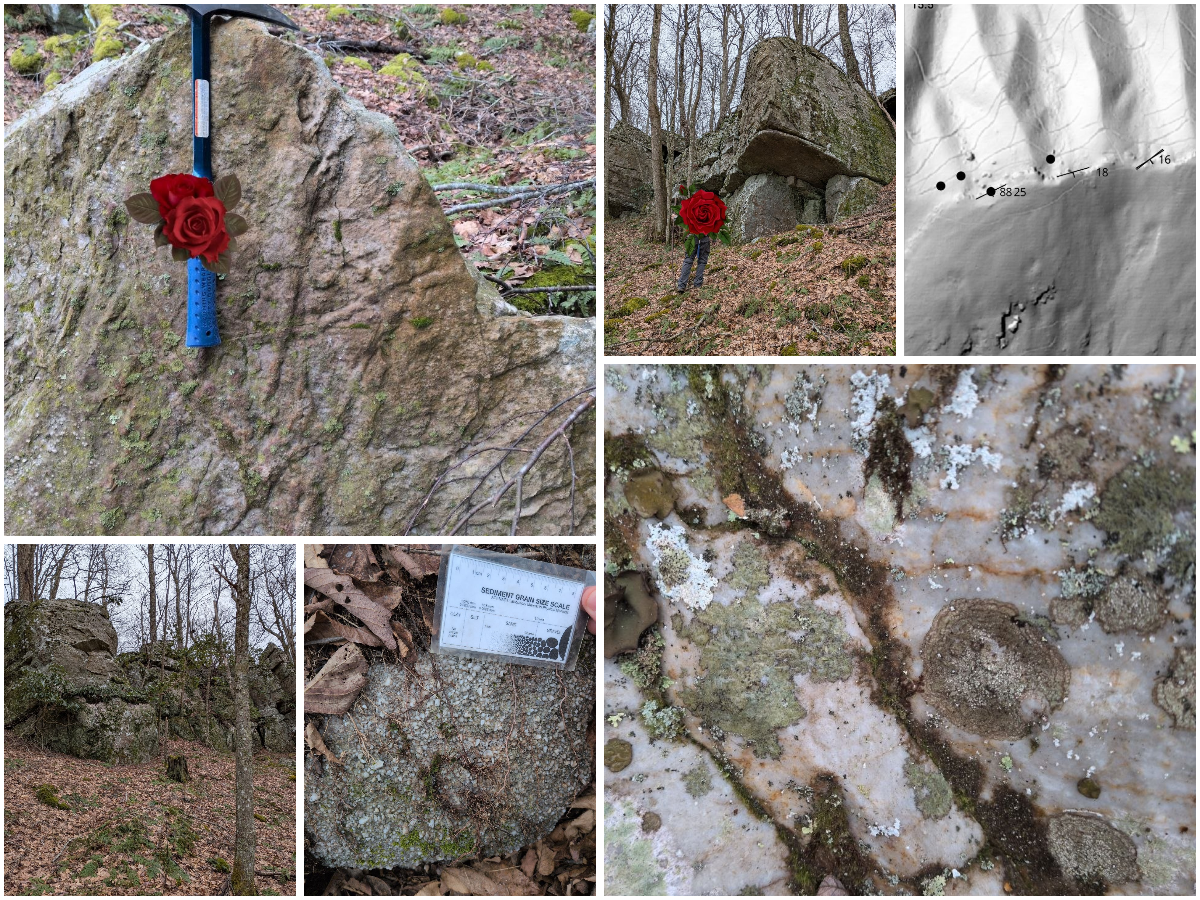
In early March, I left for a few days to do a two car traverse in southwest Virginia to scope out the Tuscarora-Juniata sandstone contact that runs along a mountain top. How can I not be in awe of the Tuscarora Sandstone? It is one of the major ridge formers in the Appalachian Mountains. She's over 400 million years old, and VERY resistant to weathering. It's a lightly colored quartz arenite. In lower sections of the unit, you can see some of the great conglomerates it produces too. Where it pokes out of the ground, it's usually dramatic! (IT ALSO covers the ground in boulder streams that are very annoying to walk down while mapping 💀) Some great places with the same rock unit you might be familiar with are Seneca Rocks in WV and McAfee's Knob in VA.
This area we were on had some forest service roads nearby but no major hiking trail! This outcrop had some HUGE pieces that had disconnected from it. I made sure to include a photo with my boss for the scale of the outcrop. Down the mountain, by the road in some areas there were boulders I would describe as "school bus to house sized." Thankfully, all of that happened an untold amount of time ago. My boss did point out a few spots that made him say "the only thing holding this up is time." 😅 That's probably part of the reason they're not encouraging people to come up here with a named hiking trail.
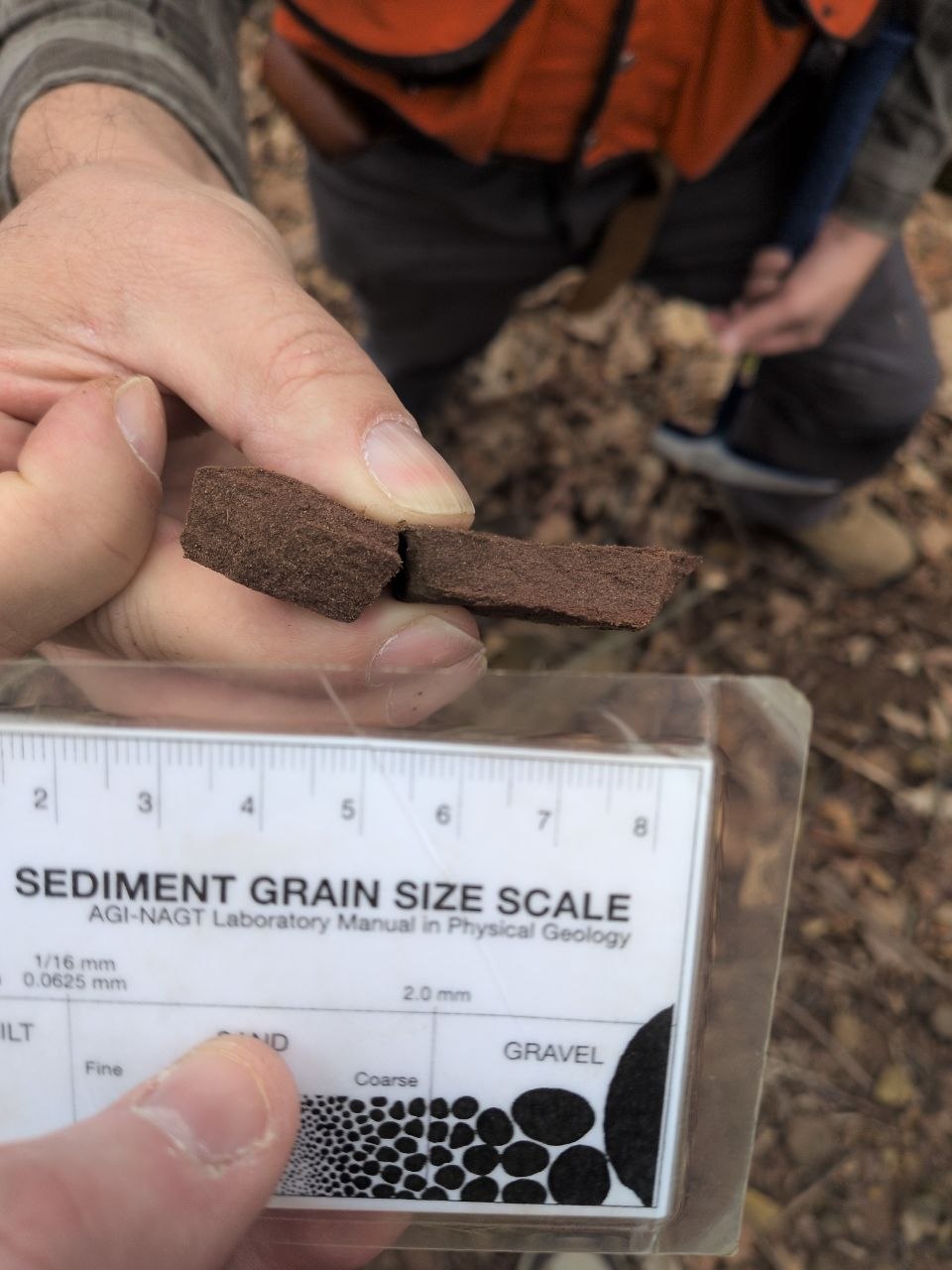
The Juniata unfortunately did not show herself very well on this traverse. It is a rich red colored sandstone/siltstone. We saw chips of it just along the north side of the ridge we were on. Other than that it stayed mostly on that side. We didn't expect that, so we used that information to move the contact we had drawn further north. That's what our fieldwork in the Valley and Ridge is all about. We draw contacts based on previous mapping nearby and what we see on LiDAR. Then we go into the field to check the accuracy of what we have drawn.